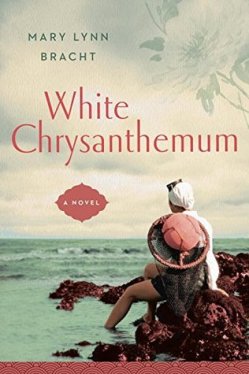
 “White Chrysanthemum” is a historical novel, published “in 2018, by American author Mary Lynn Bracht. This bold endeavor shines a light on the nearly-forgotten history of the so-called “comfort women” exploited sexually by the Japanese Imperial Army during World War II. It took determination to stay with Bracht’s telling of the brutality of the era. Bracht subjects are the young girls and women abducted from their homes or tricked into sexual slavery. She does not shy from the horrors they suffered at their captives’ hands. The details sometimes come with a strong emotional punch.
Bracht’s characters live in an occupied society annexed by Imperial Japan in the early 20th century. Koreans spoke Japanese and were educated in Japan’s history and culture. Speaking, reading or writing Korean was prohibited. Things intensifed for Koreans as Japan’s involvement in the broader conflicts with the Soviets, the Chinese and then the Allies became World War II. Bracht also details the slaughter of suspected pro-communist civilians by South Korea in the late 1940s.
Bracht’s research was thorough as is her deep compassion for the Korean women who suffered and died as “comfort women.” The story wove in and out of, chapter by chapter, the lives of two sisters, Hana and Emi. Hana was abducted into forced sexual slavery; Emi was left behind to live a long life never knowing her older sister’s fate. Bracht, whose mother is Korean, was led to write the novel after visiting the memorial in Seoul to these often forgotten victims of war in 2016.
We learn of the proud history, dating back to the 17th century, of thehaenyeo, the deep sea diving women of Jeju Island, about one hundred miles off the southern coast of Korea in the East China Sea. The haenyeoare known for their independent spirit and bravery as they free dive year-round into the depths catching shell fish and other delicacies. The role of the haenyeoled directly to the semi-matriarchal nature of Jeju Island’s culture.
The novel opens with a dream-like description of eleven year-old Hana’s shamanistic initiation into the haenyeoworld. Shortly thereafter we are brought to the horrors wreaked on Hana as a sixteen year-old kidnapped and raped by a Japanese corporal, Morimoto. His life is then entwined with hers until near the end of the book. The rape is her initiation into brothel life where she services thirty to forty soldiers a day for several years.
Bracht does not spare the reader the harrowing details even of routine gynecological exams forced upon the “comfort women,” their washing of used condoms and the sadistic rituals committed on their bodies. Hana is the vulnerable but strong teenager who weeps for her family, agonizing for their well-being after her abduction, hoping against hope that her father is searching for her. Yet, as the trains with blackened windows she rides with other female captives take Hana further and further from home, they bring readers face to face with the stark reality for the majority of these estimated 200,000 Korean women. Most perished or never returned to their families. Morimoto eventually takes Hana to a brothel in Manchuria and then to Mongolia as Japan begins losing the war. In Mongolia, Hana is left with a poppy-growing family of nomads. This changes her fate, rendering some of the most touching encounters Hana has in the nightmare that has become her life.
We learn of Emi’s story through the retrospective lens of her now seventy five years. A widow in poor health, she is a haenyeowho still dives daily. Her relationship with the sea is beautifully told. We learn of her unfulfilled life in a forced marriage to a North Korean man after her father is killed and her mother kidnapped as a political prisoner during the Korean civil conflict. Through this marriage, Emi mothers two children while her husband inherits her parents’ property. Her now grown daughter who eschewed becoming a haenyeo, is a professor in Seoul living with an American women lover. Her son is the father of one grandson on whom Emi dotes.
But Emi’s memory of the trauma of her sister’s disappearance and her parents’ horrible fate has led to much self guilt, leaving her emotionally cut off. On what she believes will be her last visit with her children in Seoul, Emi reluctantly attends the thousandth “Wednesday demonstration” which gives new meaning to her life. The demonstrations take place across from the Japanese embassy in Seoul and call for Japan to “admit is crimes,” with reparations for the “comfort women.” The demonstrations began in reality after several of the surviving “comfort women” filed suit against the Japanese government in 1991. This led to a formal apology to some of the remaining women and to the establishment of a compensation fund for victims from Korea, the Phillippines, Indonesia, Taiwan and the Netherlands.
Emi’s sighting of a statue of a “comfort woman” unveiled at the demonstration draws her due to its uncanny likeness to her sister. Emi is sure Hana was the statue’s model. Emi has new hope of finding Hana alive. Regardless, her life force now is reignited through connecting with Hana’s spirit, if only through the statue. This section of the novel reveals the symbolism of its title “White Crysthanthemum.”
Readers will not soon forget Bracht’s book. She brings heart and honor to the civilian victims of the horrors of war. In her Author’s Note, Bracht writes that her pilgrimage to Seoul in 2016 allowed her to see the Statue of Peaceas a symbol of “wartime rape of not only Korean women and girls, but all women and girls the world over.” She calls for the inclusion of “women’s wartime suffering in history books,” commemoration of “the atrocities against them in museums, and” remembering “the lost women and girls by erecting monuments in their honor.”
Andrea DiLorenzo
May 31, 2018

 Andrea DiLorenzo's Blog - A Place for Insight and Spirit