How many cities exist where you can walk within minutes from one world-class museum to another? I’m not sure of the number, but I know Washington, DC is one of them and I’m happy to live close enough to its center to take advantage of this richness.
I had almost forgotten what walking around the National Mall of Washington can feel like since my husband John and I hadn’t made a foray there via the area’s Metro system since before COVID hit in 2020. On a chilly Sunday in April this year, we decided to take the plunge for what felt like a good opportunity to reconnect with DC via Metro. The experience fulfilled our hopes.
We had both regularly ridden Metro as commuters for decades while working. Even after retirement, we took the train to concerts at the Kennedy Center and other downtown venues. We loved living a mile from the end of the system’s Red line, the Shady Grove station. We could walk there and be close to the White House and other downtown points of interest within forty minutes or so. But COVID put a screeching halt to those outings. Even when things began to open up some in 2021, the January 6th insurrection at the Capitol led to a fenced-off closure of the National Mall, the site of so many treasured museums and monuments. Friends who visited there reported it felt like a scene out of the Twilight Zone. We lost our desire to head downtown.
Our first challenge this day was to find our way from our new home in the city of Rockville to the Rockville Metro Station. Since we had been accustomed to using the station near our former home, finding the parking lot and making our way into the new one took a bit of planning. We even used GPS though we only live about 4 miles away.
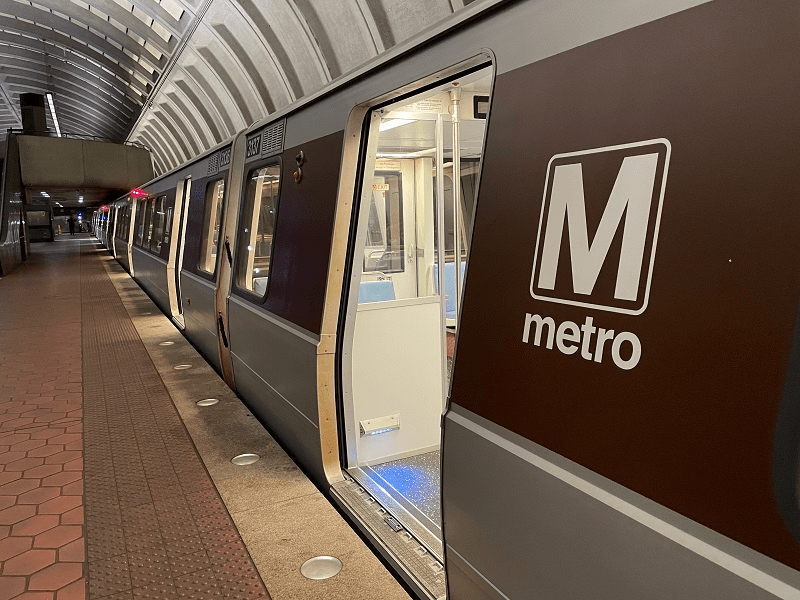
Once aboard the wide-bodied, Italian-designed cars now in use throughout the Metro system, I did what I always enjoyed most when commuting via Metro: I people-watched and listened for languages other than English. The ride did not disappoint. I was happy to reconnect with the ethnic, racial, cultural and age diversity in our area, something I’ve been somewhat removed from since moving two years ago to our continuing care retirement community populated largely by white, elderly people. On the train that day, I observed Latin Americans, Africans, Asians, single people, parents and grandparents with little ones in tow and many couples, straight and gay. I was reveling once again in the satisfying feeling of living in a large, cosmopolitan area, the reason I chose to come to Washington, DC after graduating from college in 1973.
The ride on Metro was just the first of many special moments that day. Coming up the escalator from underground next to the Smithsonian Castle and having the openness of the Mall greet us brought on a feeling of being part of something greater than our suburban village. We were in the nation’s Capital and the Capitol itself was right in front of us. Notwithstanding the many fraught political moments recently taking place within its buildings, being close to it physically reignited the importance of its symbolism and meaning as an institution of our democracy.

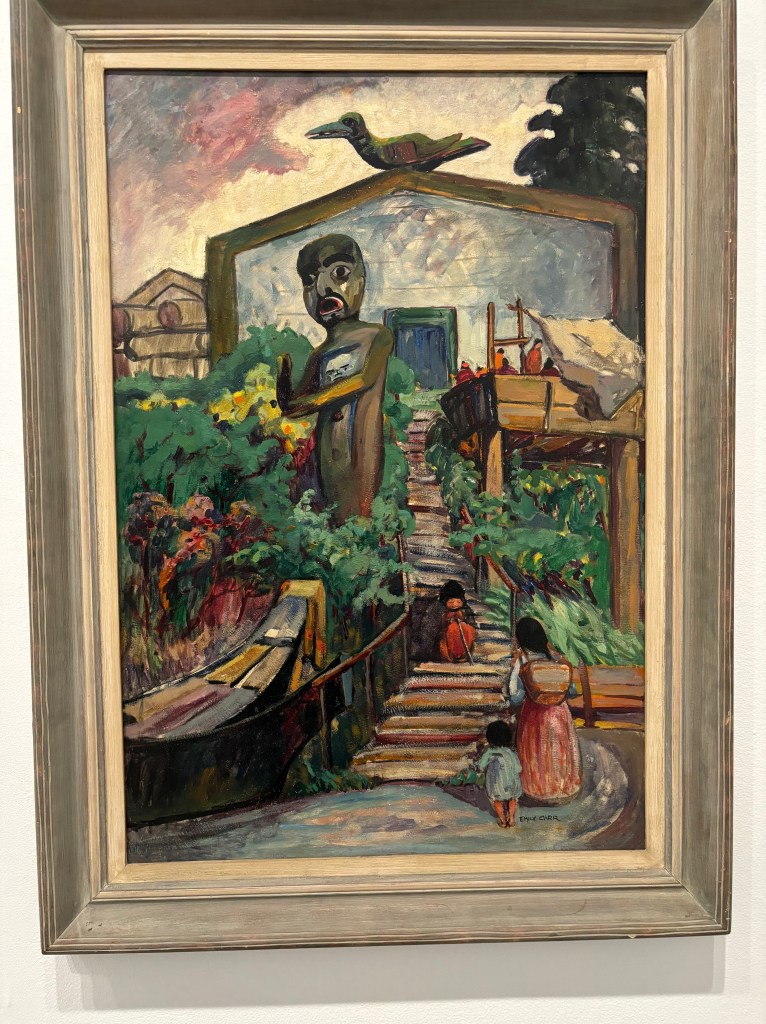
Our goal for the day was a visit to the Hirshhorn Museum’s exhibit, “Revolutions,” an exhibition of art made by 117 artists between 1860 – 1960, all part of its permanent collection. The juxtaposition of 19th century pieces, including for example, portraits of grand dames alongside those of contemporary African artists portraying everyday folks made it eye-catching and politically and intellectually engaging. We had only visited three galleries, seeing paintings by, among others, Canadian artist Emily Carr and American Edward Hopper, when a security guard discretely approached us, asking that we leave the building post haste as there was an “emergency” requiring evacuation. Along with the other hundred or so visitors, we quietly filed out, informing others on their way in of the situation.


The question became: what next? Since we were on the Mall, rather than shuffle out of the Hirshhorn feeling deflated after our precipitous leave-taking, we were surrounded by other offerings – several Smithsonian Museums and other art museums, the East Asian Freer Gallery and the National Gallery of Art, including its splendid East Wing. I have always loved the I.M. Pei-designed East Wing, so we headed directly there, a leisurely 10-minute walk from the Hirshhorn.
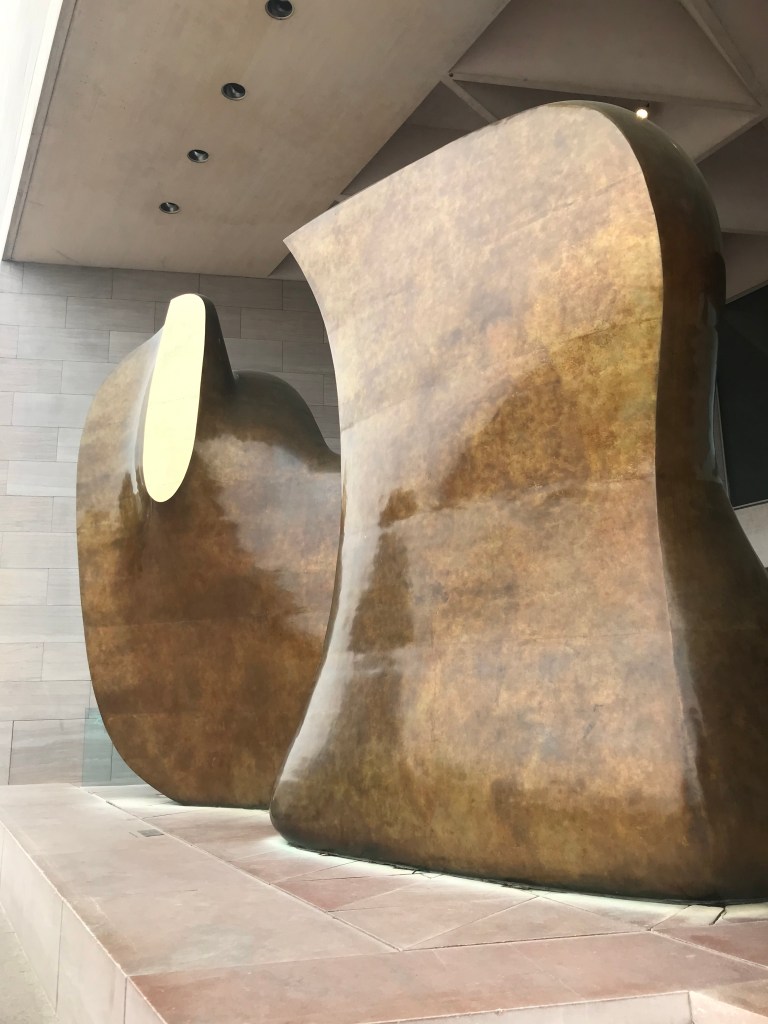
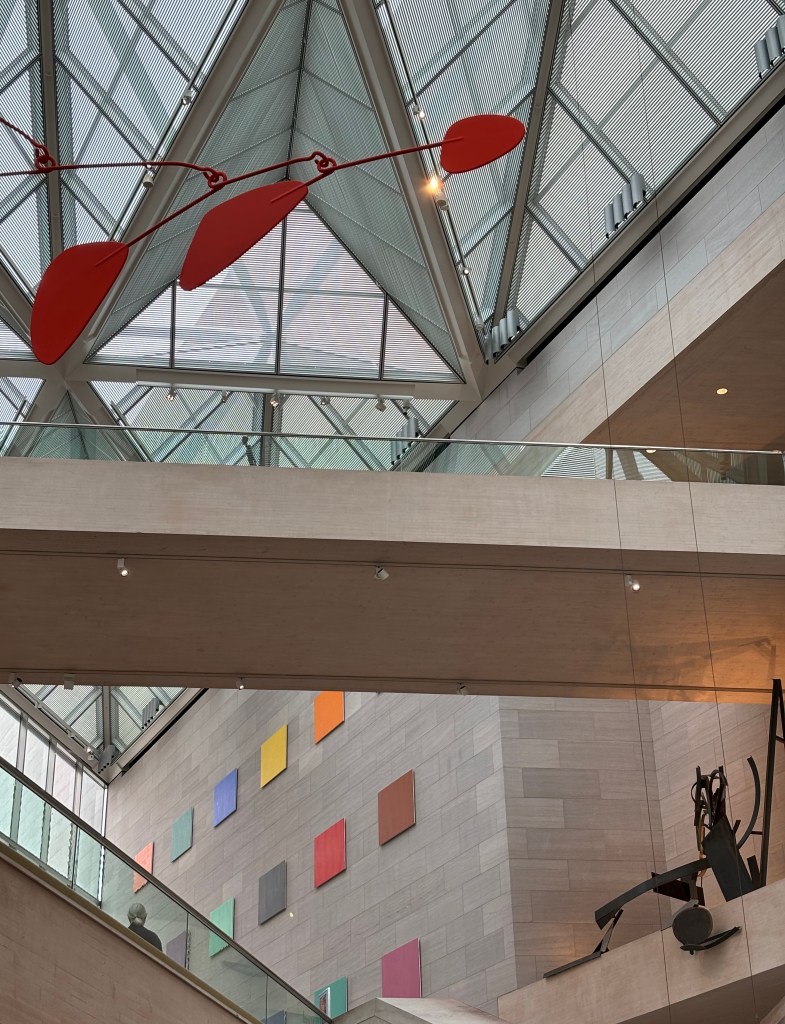
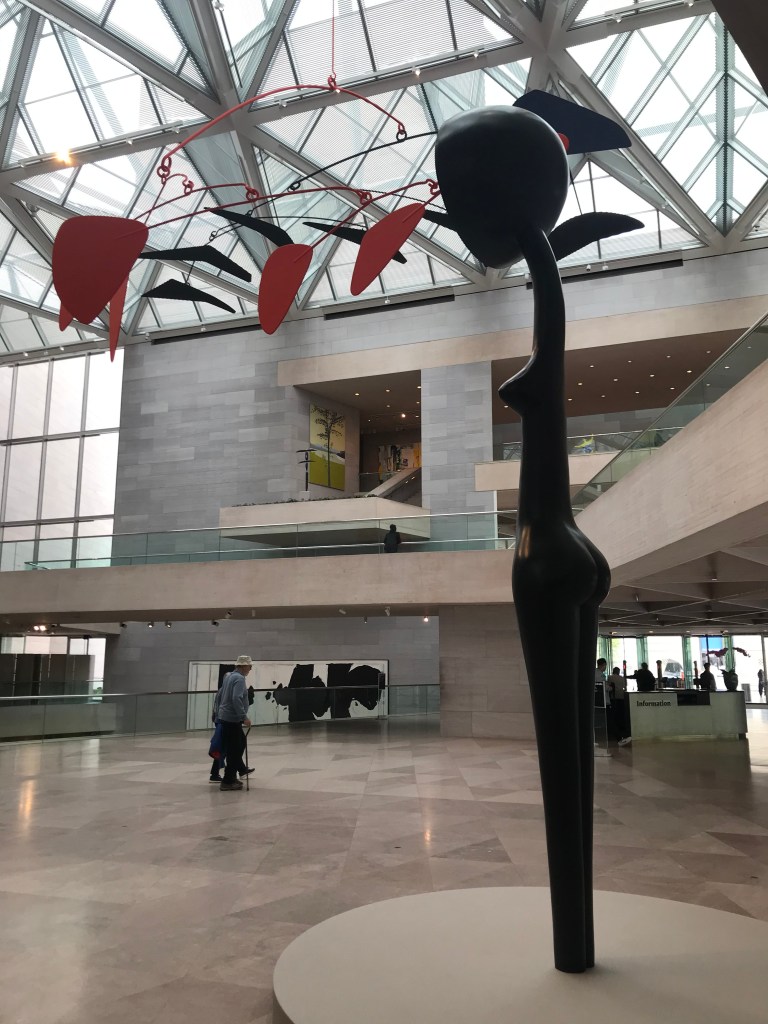
After passing the massive Henry Moore sculpture at the entrance, we walked through the museum’s Concourse, its main atrium. Its open and angular forms extending to its sky lights include a several ton Alexander Calder mobile hanging from the ceiling. I always marvel at how this artistic behemoth seems to be free-floating from its sky-high perch.
We then headed down the open staircase to our next delight at the below-ground level: the moving walkway connecting the East and West Wings of the Gallery. We were on our way to the Cascade Café for a late morning coffee. The walkway is surrounded on three sides by a flickering LED display that brings on a sense of walking through outer space. While I try to get in as many steps as possible in a day, here, I stand still, allowing myself to linger as long as possible on this marvel of lighting design and movement. If I had my druthers, I would ride back and forth all day letting the feelings of amazement and delight fill me, always as if it were my first time.

As we approach the West wing, I anticipate encountering the staircase-shaped, yards long and high, thick glass window up to the street level which holds back a cascading wall of water. Today the scene offered the enhanced pleasure of a string quartet comprised of young musicians playing a modern piece. People gathered around, cellphones ready, eager for this unexpected treat. The group finished playing their short piece and quickly disbanded, leaving us to our own conversation while enjoying our coffee and croissant.
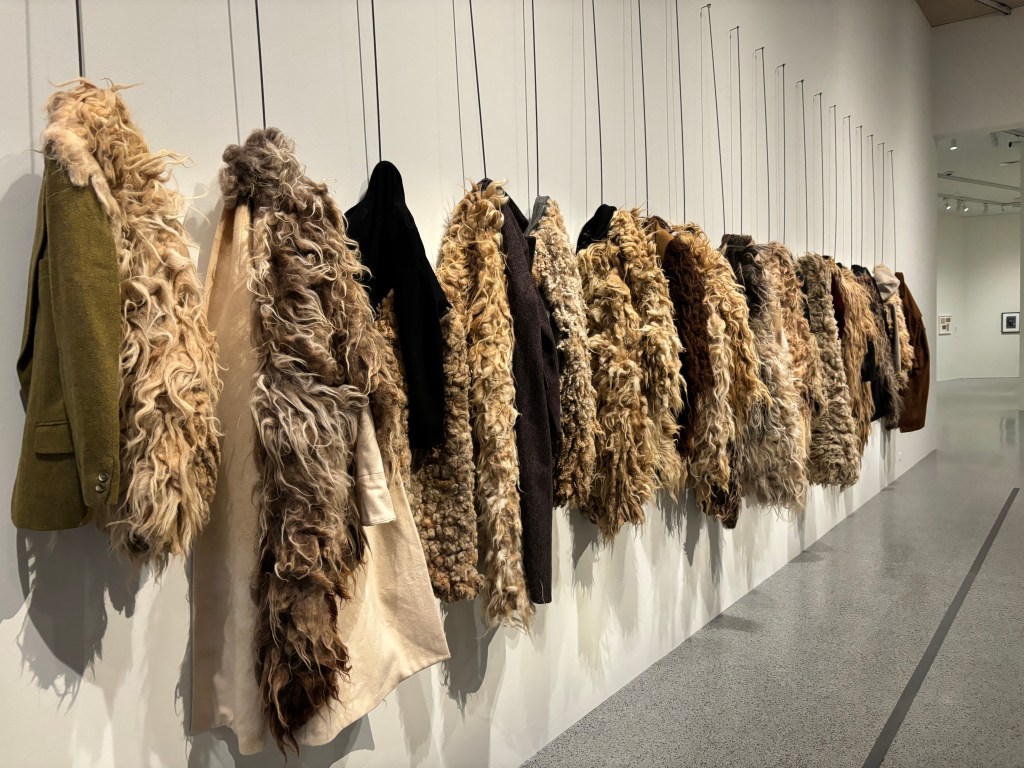
Next we took in the East Wing exhibit titled “Woven Histories: Textiles and Modern Abstraction,” whose focus was how techniques such as weaving, knitting, netting, knotting and felting, once considered “women’s work or domestic craft,” strongly influenced abstract modern art. The 160 works featuring fifty artists whose work challenged and delighted, bringing into the limelight those once “marginalized for their gender, race or class” as the museum’s website notes. One piece, named by the artist Ann Hamilton (side by side coats), featured woolen coats with raw fleece embedded within them. I learned that so many people wanted to touch the unprocessed fleece that the museum had to post a guard next to it to prevent that from happening, in other words, to remind visitors that the piece is art.
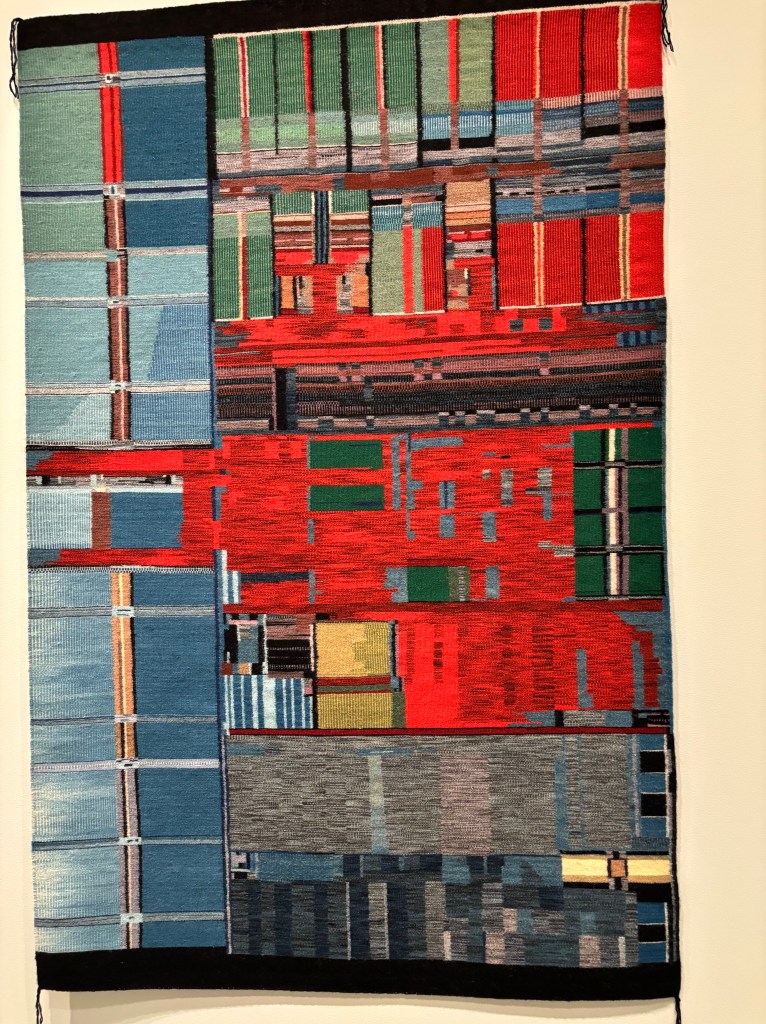
There were two other pieces I found particularly engaging, one titled “Replica of a Chip” and the other “Untitled (Unknown Chip)” done by Navajo/Diné artist Marilou Schultz. Schultz was commissioned by Intel Corporation to make the intricate woolen blankets based on the design of their Pentium microprocessor. This commission also honored the female workers Intel hired on Navajo/Diné land to assemble their circuit boards, citing their nimble finger work, honed on textiles, as the reason.
We completed sauntering through the textile exhibit ready to head home. We walked to the closest Metro station on the Red line, Judiciary Square, passing the courthouse where former-president Donald Trump’s trial for his role during the January 6th Insurrection would be taking place. Upon entering the Metro car a few minutes later, much to our surprise, just near the door, we encountered one of our close friends smiling at us. He was on his way to his gym. We reveled in the synchronicity of the event and felt it was a good omen for this first of what we hope will be many more Metro trips to the treasured offerings of our beloved capital, Washington, DC.
May 4, 2024

 Andrea DiLorenzo's Blog - A Place for Insight and Spirit